Dust: Adam and the Atonement
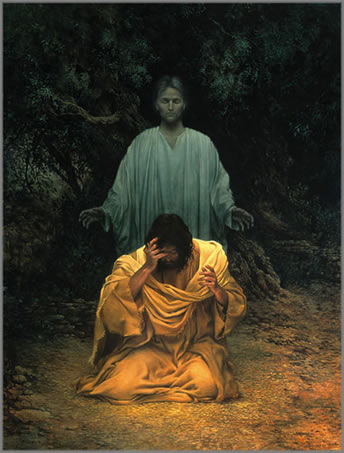
Christ alone could atone for mankind. Christ alone suffered our sins in Gethsemane.
Which makes you wonder why an angel stopped by to lend him a hand. Luke 22:43.
In restoration doctrine, this angel was Michael, i.e, Adam.
We know that an angel came from the courts of glory to strengthen him in his ordeal, and we suppose it was mighty Michael, who foremost fell that mortal man might be.
What does it mean that Adam strengthened Christ during the Atonement?
Let’s take a detour and talk about dust in the scriptures.
In the scriptures, dust is used for sorrow. A crying woman sinks to kneel on the ground and grabs the dust. She raises her anguished face to heaven and her dust-filled hands. She opens her hands and the dust falls onto her. Dust is mourning.
In the scriptures, dust is used for lowliness. The proud fortress will be ground low to the dust. When all our pride ends in death, to dust we shall return.
Dust is used for death. Ashes to ashes, dust to dust.
In the scriptures, dust is also used for us.
Genesis 13:16
And I will make thy seed as the dust of the earth: so that if a man can number the dust of the earth, then shall thy seed also be numbered.In the sweat of thy face shalt thou eat bread, till thou return unto the ground; for out of it wast thou taken: for dust thou art
And the Lord God formed man of the dust of the ground, and breathed into his nostrils the breath of life; and man became a living soul.
As the above scriptures suggest, dust also represents Adam. The Hebrew word Adam means the man Adam, mankind in general, and also refers to a kind of dirt. The New Testament also teaches that Adam represents all of us.
So at Gethsemane, where Christ atoned for our sins, it makes sense that Adam was present. Adam represents all of us, all of our mortality, and lowliness, and weakness, and labor. Isn’t that a great symbol? Does it make sense to say that we and all our weakness were present for Christ during the atonement? Obviously.
Alma 7:11-12, one of the most insightful verses in the Book of Mormon, says that Christ atoned for everything about us. Sins, yes, but also weakness, infirmity, pain, suffering, all of it. In other words, “Adam.” I believe that at the Atonement Christ took on the experience that each one has of all the weak and suffering and sinful events of our lives and all their negative consequences. The kind of experience we will have at the judgment where we experience again each moment of our lives forever, but Christ did it for all of us. Although I believe that Adam was literally there, I believe that “Adam”–all of us and all our weakness was also there.
So in what sense did Adam strengthen Christ? Adam came as Michael, the great Archangel, not as someone meek and lowly. What does that mean?
Let’s take a detour into one of the other great scriptures. Matthew 25. “Inasmuch as ye have done it unto the least of these my brethren, ye have done it unto me.” What if we take that literally? If Christ communed with all our experience, not just our sins and suffering, then it means when he suffered a person’s hunger pains he also experienced their relief when someone gave them bread. When he suffered our wrongs with us, he also enjoyed the heady feeling when others stepped in to do justice. This is what I believe. We–“Adam”–were present to him in Gethsemane and therefore all our sins and wrongs and suffering but also all the good we have done, all our humble repentance, even our glorious \ moments where we would say that we Adam were like an archangel Michael of victory. The net result is not in our favor. Christ suffered agony. Blood broke from his skin. Still we can say that we strengthened Him, and we are strengthening Him day by day just as day by day we can add to his burden.
This is what I believe. It tastes good to me. It reminds me of the mice gnawing at the ropes that tied mighty Aslan. Lewis got that idea from Aesop’s fable. That fable occurs in many old sources. Since the lion was anciently the symbol of kingship, even divine kingship, and specifically of Christ who is the Lion of Judah, I wonder if there was ancient revelation that made its way into that story and Lewis wasn’t inventing something new even if he thought he was but merely adding back the original wisdom.
Related: Deification of the Dust

Filed under: We transcend your bourgeois categories | No Tag