September 11, 2026
September 11th, 2026 by G.
September 11, 2001. 25 years have passed—25 more nails in the cross—but we remember. (more…)
September 11, 2001. 25 years have passed—25 more nails in the cross—but we remember. (more…)
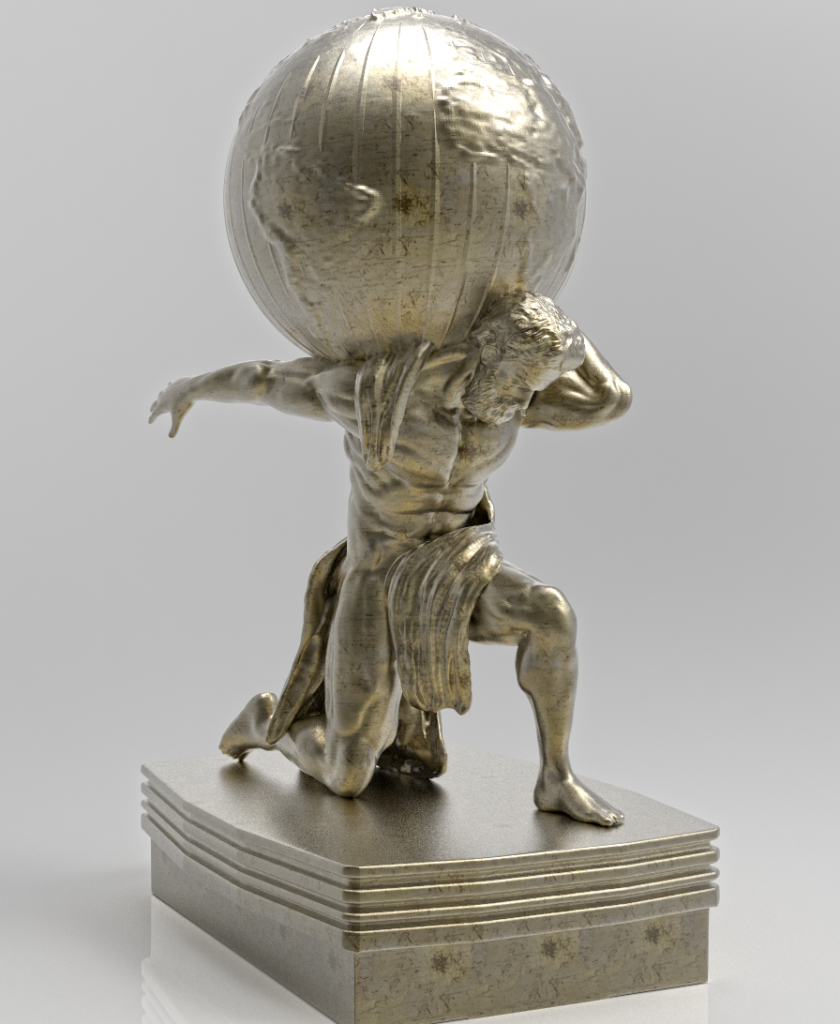
Atlas started small. He grew.
His first burdens seemed heavy enough. He bore the burden of working out his own salvation in fear and trembling before God. He bore the burden of growing up. He discovered the grace of Christ. He bore up.
He took on more burdens before he was ready. Mission, job, marriage. He staggered a bit. Infused with grace, he bore up. He took on more. His shoulders got broader and broader. Family children hometeaching community neighbors friends truth beauty land heritage generations. His shoulders are broader and broader. His back is bigger and bigger.
Now it is only the weight of the whole world on his shoulders that keeps him down.

Easter.

I am the Resurrection and the Life.
The Strange Doctrine of the Double Atonement (in other words, why both Gethsemane and the Cross?)
Unexpected Lessons in Theology from Dead Economists
the Royal Largesse Theory of the Atonement
The Meaningful Choice Theory of the Atonement
My favorite– Easter in Picture and Words
This is why we can never lose hope in our circumstances. God doesn’t play fair. When the devil has jumped His last checker He places a queen and multiple rooks on the board.
From Francis Berger, Escaping Raskolnikov’s Delirious Lenten Dream. Recommended by Bruce Charlton.

It’s a story that has been told many time before. Page 1 is a peasant boy living an ordinary life; he and his friend are away from supervision hewing wood and drawing water and being comically boyish. Imagine that this book is copiously illustrated, so on the facing page there is a warm, funny line drawing of two boys hanging upside down from branches trying to wrestle.
Page 2, they come back to their village to see it in ruins. There had been a sudden raid by evil creatures out of legend destroying and burning. Horribly, they also kidnapped. The drawing is a view from behind the boy as he stands looking at the shattered hamlet. The drawing is smudgy and chaotic.
Page 3, he discovers his parents are dead and his younger sister was kidnapped. Here we have a picture of a young girl with her head turned to look back to us–she is distressed and sad–while a dark and inhuman arm pulls her into a brooding forest. This drawing is detailed.
Page 4, he runs off into the local woods to boyishly grieve. The drawing is him alone, dejected, and crying.
Page 5, he makes a vow by a spring to get his sister back and a supernatural experience ensues. Some holy presence in the spring witnesses his vow and rises up to bless him and prophesy of his destiny. The drawing is the boy in awe at the angelic being rising above him.
Page 6, he heads back to the village, but it is now night. He hears noises and grapples with his own terror. This scene is played comically. The threat is no threat at all. The drawing is a little boy with a stick clutched in his hand, marching truculently and grimly towards a skunk.
Page 7 onward, he is back helping the village. We meet other friends and neighbors and we learn some of the lore of who the evil raiders may have been, what it portends, and our first hints about the meaning of the boy’s prophecy at the spring. The drawings are scenes of ordinary life; they are calm and hopeful.
Page 38 onward, the boy’s first quest, something minor to help the hamlet. Perhaps he and a companion or two (including his friend from page 1) are sent to plead with a Lord for help for the hamlet. There is the comedy of him and his bumbling companions being fish out of water, the touching simplicity of an overmatched lad still determined to do his mission–and succeeding!–and the warm personal relationships between him and his companions. One of the pictures shows the reception scene at the Lord’s hall. The Lord and his court are shown very straight and graceful like a pre-Raphaelite painting while the boy and his companions are drawn more in a Norman Rockwell or Peter-Breughel peasant key.
Page 54 onward, on their way back they have an encounter with danger. It is small but real, and requires them to fight. Afterwards they have a second encounter with the supernatural beings of Light. The boy receives more direction and his companions are recruited to help him. They discover there is a rising Dark Lord who cannot be defeated by ordinary means. A final drawing in this segment is the three of them kneeling humbly.
Page 75 onward, he decides he has to leave to discover a source of power that will help him fight the Dark. He and his companions leave for good this time. The drawing of the village farewell is touching.
They have major and minor adventurers. He acquires an animal companion, a very comic older friend, probably not exactly human, he grows in skill and power. There are long segments where he is being closely hunted by the Dark and must flee and lurk and hide. He wins fights. He meets with the King. There is an unexpected treachery. There is also a peril that he only escapes through the brave sacrifice of a friend and he weeps. He discovers that his own nature can betray him, that he himself has bad flaws that holds him back, and he has to face his own fears and weaknesses. He discovers more about the Light, what it is, and why it relies on him and others like him. The peril grows and becomes suffocatingly menacing. The hero’s plan fails and he is badly defeated and wounded.
All copiously illustrated.
But when all seems lost, some weak and helpless friend gives him unexpected aid and the prophecy is fulfilled in a surprising way. The boy’s own weaknesses and unsophistication turn out to be his greatest strengths, and the ruthlessness and malice that gave the Dark Lord his power turn out to be the Dark Lord’s downfall. In a dramatic confrontation, the boy and the Light defeats the Dark.
The Light chooses and honors him in front of all the people. The drawing shows the boy now become a young man, full of strength and nobility.
But what comes after that? (more…)
From Columbus Day, through Thanksgiving, we celebrate the rich heritage of Settler-Americans, including Colonial-Americans, Pioneer-Americans, English-Americans, Scots-Irish Americans, and Conquistador-Americans, and honor their vibrant contribution to our national fabric.
From their curious folkways such as freedom under law, square dancing, and white guilt, to their various scientific achievements and inventions, such as calculus, the Chia pet, toilet paper, and marketing, truly they are part of who we are!
We did not pray for rain in vain.
The sun did not set, so thick were the clouds,
and at the night hour, the rain fell like rock,
massed like rock, and lasting like rock,
without ebb or throb.
It reached the sky, one great mountain
of water and thunder, and we were under.
It overwhelmed the soil–and the noise and light–
it overwhelmed the mind.
One electric blast stayed so long it was no flash,
a blow of light and not a lash.
This is a story of two friends in an airport.
“I don’t get it,” the one friend said. “Your life is so constrained. So narrow. You are standing in here in this little line. You won’t leave it. And then you’ll stand in another line and you’ll shuffle onto an airplane with an assigned seat you’ll have to sit in. It’s so suffocating. Me, I love my freedom too much to ever do that. By rejecting all these rules, I get to wander around wherever I want. I can go down to the luggage return or even out to the parking garage. I get to experience the airport to its fullest. There no limits. Whereas you, you just stand in line. Why do you do it?”
“I am flying to Paris,” the other friend said.

glennterryart.com
Adam and Eve were created from the dust, the scriptures tell us. We haven’t escaped that lowly origin. Dust is where we come from, dust is who we are, and dust is where we are headed. (more…)
Jesus healed a man on the Sabbath and told him to take his bed and walk. That must have been against the Sabbath customs, because the local Pharisees milked the guy to find out who’d told him to walk around carrying a bed, and then went after Jesus when the guy talked. (more…)
This is a dream. (more…)
The sovereign is the one that makes exceptions. That’s the famous aphoristic summary of Carl Schmitt on political theory. It’s intuitively compelling while intuitively incomplete.
Schmitt is usually thought of as a theorist in the fascist ballpark. His aphorism, however, points in a democratic direction. It suggests that every institution includes an implied arrangement for nullifying top down decisions by lower level individuals doing something different through recalcitrance. Every democracy is Irish democracy. (more…)
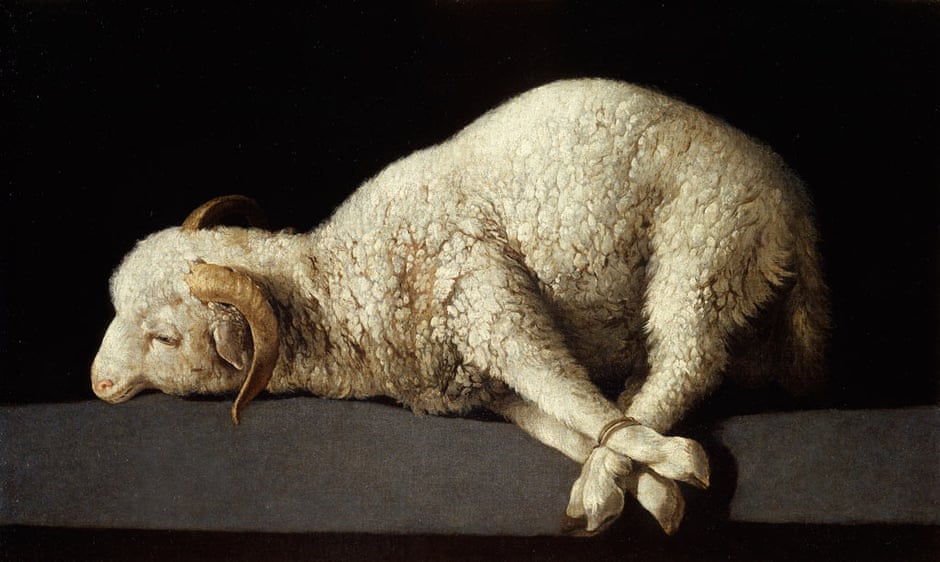
My little baby just got out of the hospital. She’s fine now, no need for sympathy, I mention it because I learned something from the experience. (more…)

***
An economist’s studies led him to the insight that failure and unexpected obstacles are major drivers of innovation and creativity. But innovation and creativity aren’t just virtues for the workday. Creativity–creation–is the fundamental attribute of God. What starts out as an economics principle becomes an insight into the fundamentals of life: it is when we are desperate that we become the most godlike. We blaze brightest when thrown into the fire. (more…)