The Traveler at the Ford
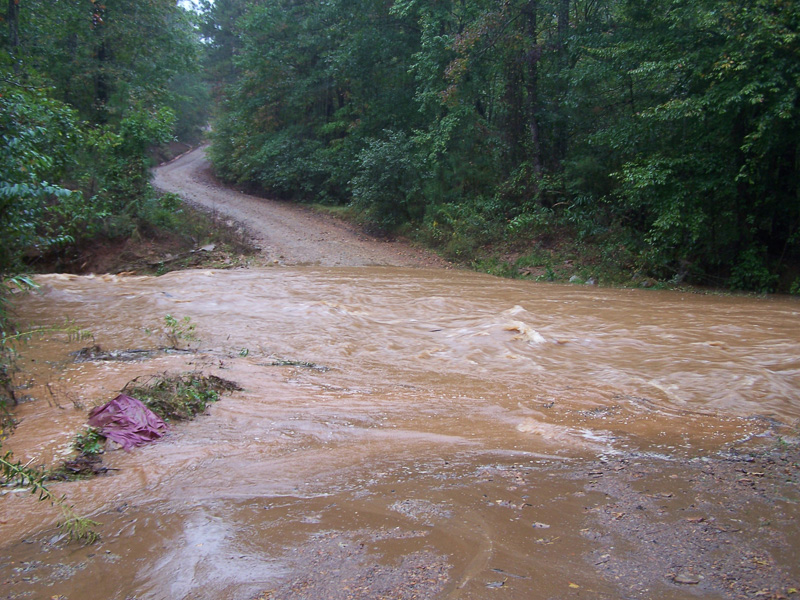
A traveler on a long journey came to a ford. Due to recent rains, the stream was swollen to a flood. The traveler was perplexed to know what to do and exercised his mind for a solution.
“It would not be fair,” the traveler reasoned, “for my way to be blocked because of rains outside my control. And surely the risen waters cannot be very dangerous, as it would be unjust to punish a man with severe injuries or even death merely because he was attempting to make a journey.”
Reasoning thusly, the man plunged into the stream and was drowned.
Moral: consequences do not have to be fair.
Commentary:
In antiquity, it was the custom to write non-authoritative commentaries on fables and such. Here is my commentary on this one.
Fairness is not justice. Justice is meaningful choices leading to meaningful outcomes. That is all.
The clamor for fairness probably arises from a metastasized belief in equality. I have reservations about the view that the modern structure of thought is a form of Gnosticism. But metastasized equality is fundamentally a spiritual principle. And the idea that spiritual principles are apart from and above reality, and that reality must bow to them, does seem gnostic to me. (Aside: we sometimes indulge in the same fallacy in the Church.)
Moderns attack Christians because our scriptures talk of hell. We explain that damnation is not really a punishment. It is the agency of the sinner effected to bring themselves misery and separation from God. But they will not understand. They persist in believing that any eternal consequence must be an arbitrary punishment imposed by God as an act of will.
And even, though not believing in God themselves, they seem to fundamentally believe that physical and social reality is a punishment or reward imposed by a power. How else to explain their attacks on women needing to avoid drunken parties to avoid rape–“it isn’t fair to blame the victim”? Their complaints that it is unjust than men and women have different biologies? That anyone could be constrained in their choices merely because “they were born that way”? To complain that some children are better off, not because of their deserts, but because they happened to have parents who read to them?
It is all a wail against reality. Having killed God, as they believe, they are now trying to remake society into a deity who is “nice.”

Filed under: Deseret Review | Tags: Aesop's fables, fables, LDS
MC
September 14, 2016
You left out the part where everyone who had ever told him not to attempt to cross a swollen river was blamed for fomenting a “drowning culture.”
I think this is probably one of the 2 or 3 most significant mental distortions of modernity. I can’t count how many of my conversations with leftists have consisted of me stating, “If you do X, the likely result is Y.” And instead of disputing this fact, the leftist argues, “People shouldn’t have to suffer Y just because of X.”
It’s a bit like the intro to Enoch Powell’s “Rivers of Blood” speech:
“Above all, people are disposed to mistake predicting troubles for causing troubles and even for desiring troubles: ‘If only,’ they love to think, ‘if only people wouldn’t talk about it, it probably wouldn’t happen.'”
“Perhaps this habit goes back to the primitive belief that the word and the thing, the name and the object, are identical.”
G.
September 14, 2016
It’s why we have a phrase, “don’t shoot the messenger.” Because people are disposed to shoot the messenger. In the primitive, magical mind we all inherit, the bearer of bad news is in some sense *creating* the bad news. Historically, when people talked about a calamity they had to take some action to ward off the calamity, because mentioning it wsa felt to invoke it. From this superstitious mindset to modern SJWs is a distance of about 0.
James
September 15, 2016
At first glance this parable seemed to me to contradict Herman Melville’s The Lightning-rod Man (http://www.melville.org/lrman.htm). It occurs to me now, that the narrator of Melville’s tale does not escape death as a just compensation for his faith, but rather because the consequences of his decisions do not determine his faith, precisely because he believes in divine justice and not merely material justice (what I would call fairness). It’s worth noting that, in strict temporal terms, the Traveler’s fate could have been without fairness OR justice; he could just have easily decided (from a prudent distance) to not ford the river, only to have the swollen river engulf the bank and bring the Traveler to an identical end. If the Traveler is to receive justice in every possible outcome, that can only happen in the context of eternity and an existence outside of mortal life.
The obsession with fairness happens because materialists attempt to circumscribe justice within temporal limits. Having done so, they cannot bear to face the horrible reality that this is impossible, and that their obsession over the equity of every documented slight or offense, however micro, has made them and others miserable. This is only one meaning of the warning, “He that findeth his life shall lose it: and he that loseth his life for my sake shall find it.”
I like the idea of these two parables together. On the one hand, actions have consequences that we would be wise to consider. On the other, not all of those consequences are fair or just, or if they are all just, it is only on an eternal scale. Whether we see fairness or justice, then, depends on whether we seek to impose our own fearful, selfish rationale on a temporal world that does not care one whit for our welfare, or whether we seek to accept the order that exists independently of us, provided by a God for whom our welfare is His single greatest obsession.