No Country for Young White Men
This was a hard read.
There is a tendency to ascribe mystical or magical meaning to sacred texts or even just to poetry.
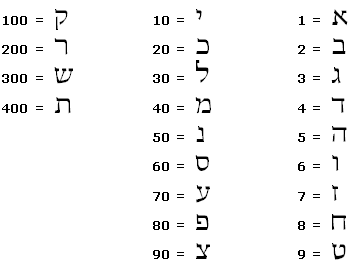
Hence practices like gematria, bibliomancy, or sortae virgilinae.

These tendencies probably exist because sacred texts or even just poetry do sometimes have mystical or magical meanings.
On the poetry side, it’s hard not to see a lot of poetry as quasi-revelatory. For us Latter-day Saints, Milton’s Paradise Lost has some distinct hits. Or even Wordsworth ‘trailing clouds of glory.’ It’s probably no coincidence that one of the biggest ‘problem’ phrases in the Book of Mormon is a quote from Shakespeare. I myself have sometimes been strongly, spiritually caught by a line from poetry and when later told ‘that’s not what the poet meant,’ have thought ‘that’s not what the poet thought he meant.’
On the scripture side, the Savior himself repurposed Old Testament scriptures as if they had a deeper meaning than just their surface context. There is clearly something more to how numbers are used in the Bible than just pure counting, as anyone will know if they read Revelation. Nephi more or less admits that there are lots of esoteric layers to scripture, though he doesn’t seem to be a big fan.
Which is a pretty high-falutin’ way of bringing up something weird about the Articles of Faith. They kinda seem to have a number thing going on.
Here’s another edition of the D&C When Everybody Else is Done. But instead of being a specific doctrinal comment on D&C 137-138, this is a daydream or a reverie.
Once upon a time, a Dark Lord rose in the land. With cruelty and hate and plunder he drove his conquests on, leaving burnt villages, dead and wounded men and women, orphan children, weeping starving people marched off in chains under the lash….
With great difficulty, the heroes defeated him and his dark arts. But they didn’t kill him. They harried him instead as he fled. For years and years they harried him. He used his magic to walk strange paths, to flee to unknown lands… still they harried him. At last, he found refuge in a small valley in a different time and place, where no one knew or could know about his past, and there he found peace. He became a craftsman, kept some goats, and lived quietly at last.
This, is turned out, was the purpose of all the harrying. The divine plan the heroes were called to live out was not just for saving everyone from the Dark Lord. It was also for saving the Dark Lord himself.
But the ambition and perhaps the cruelty of Providence didn’t end there. Because once the Dark Lord had found peace and become, in a small way, a good man…. Heaven granted him all his power back. His newly formed character was unable to handle it and he became the Dark Lord again. In that new land, he once again rose in villainy and horror and was defeated. Every few hundred years the Dark Lord rose again and the cycle repeated itself. But this was all by design. Every person in that land, from child to peasant to blacksmith to knight, was a redeemed soul who had volunteered for the experience just to give the Dark Lord another chance. Because heaven’s aim was not just for him to be good in a small way. Heaven aimed for him to be good and great. And so these loving souls labored year after year, decade after decade, century after century, while the Dark Lord labored through what might still prove to be purgatory on his way to heaven, or his own hell.
I’ve been thinking about Mosiah 15, a sorta mystical chapter about how Jesus is both the Father and the Son. About the atonement. And about Christmas.
Children always like stories of when their parents were little. They eat them up. They like stories of their parents doing cool stuff a lot, but stories about when their parents were little even better. I wonder if this has something to do with the popularity of Christmas.
Jesus being born is a fatherly role because showing your children the way is a fatherly role. Jesus atonement is a fatherly role because claiming a relationship where someone’s successes and failures affect your deeply is a fatherly role, especially if you then claim responsibility to step in to right the failures.
Its no surprise in our age of credentials that a lot of Christians think of salvation as a credential. It’s just something God gives you. It’s a database somewhere where God toggles your file from Salvation:hell to Salvation:heaven.
Salvation is a state of being.
Two inmates are in an insane asylum, each claiming to be Napoleon.
One shouts, “I am Napoleon!” and when asked how he knows, replies, “God told me!”
Immediately, another voice from a nearby room shouts,
“I did NOT!”
Napoleon jokes aside, today’s post is how it is possible to delude yourself that you are being humble because you are being realist. It’s a follow up to this post on gratitude.
|
PROUD |
HUMBLE |
|
|
DELUSIONAL |
Delusional about their means or Delusional about their ends |
|
REALIST |
Trims their ends to fit their means; aggressively attacks people who try to accomplish more |
Realizes their means are inadequate for their ends but also realizes that their ends are right |
The first Thanksgiving was in gratitude to God but also to the dead who had made it possible.
I saw an aphorism recently to the effect that humility is just realism.
Yes and no.
It is possible for the realist to adjust his ends to fit his limited means. Everyone does this, we all do this. The proud do this.
Humility is when the righteous man or woman realizes their ends are right and tries to adjust their means to achieve them. Gratitude is when they find themselves achieving their ends despite the limits of their means.
I feel today with great weight the debt I owe to my ancestors. I feel with great weight would a gift this nation is that they made with the axe and with the womb.
Great is gratitude.
It transforms the barest home into a heaven and the smallest meal into a feast. It makes happiness. It ennobles the soul. It makes a small man great and a great man divine. It is a treasure on Earth and in heaven, it is a gift fit to bring before Almighty God.
Great is gratitude, and it shall prevail.
Elders Quorum was discussing the qualities of a good shepherd. He loves the sheep, he knows the sheep, he cares about the sheep, he cares for the sheep, etc
I thought that while these were about the shepherd’s relationship with the sheep, there were other qualities also needed. The shepherd needed to be strong and enduring. He needed to be able to fight off wolves. In addition to love, he needed capacity.
This is the righteous dominion thing all over again. Too many of us more or less assume that the way to not be a predator to the sheep is to divest yourself of your predatory characteristics. But it is your predator eyes that detect the wolves sneaking up. It is your predator arm that drives them off.
So what is the capacity needed to be a good shepherd?
Well, here is where the gospel gets so glorious. The only capacity needed, at least at first, is desire.
On January 26, 2024, the First Presidency of the Church of Jesus Christ of Latter-day Saints instructed, “Each year, Church services and meetings should be limited to sacrament meeting only on Easter Sunday and on a Sunday before or after Christmas Day. If Christmas is not on a Sunday, stake and district presidencies decide whether to hold this sacrament meeting before or after Christmas.” (Letter URL, and announcement URL)
I am curious what will happen in the Spring. Easter Sunday will next be observed by non-Orthodox Christians on April 5th, which falls on a General Conference weekend. This coincidence of Sundays is not unusual. They coincided 11 out of 50 of the most recent Aprils. The usual thing on recent Conference Easters had been for the Sunday morning session of Conference, the most outward-facing session, to proceed as normal, but more of the talks than usual are about the Resurrection, and the testimonies and preaching of Christ, present at any General Conference, are given with acknowledgement that they are being voiced on Easter. Two hours later when the Sunday afternoon session starts, Easter has been mostly out of the way. (more…)
No more general conference on Saturday evening. I am not happy about this. That does not mean that it was a bad decision or needs to be changed. All I am saying is that I personally would like more general conferences instead of less and I will miss the Saturday evening session.
Heck, I miss priesthood session a lot.
We were in the woods. I had two dreams. The dream where I had magic powers was a nightmare. The dream with creepy, horrible things was funny. This is how the dreams went.
Another entry in our bad habit of talking about the Doctrine and Covenants after you have already had a chance to discuss it in Sunday School, instead of telling you what you can say beforehand. Comprising D&C 125-132.
This grave, melancholy essay on death and ill health was the thing I am the most glad I read today. There is a thread of holiness winding through it.
the difference between optimism and pessimism, and between tragedy and triumph, can just be a matter of where and when we start and stop a narrative
God punishes weakness as well as wickedness.
Book review: Rasputin-the memoirs of his secretary, by Aron Simanovich
In the spirit of return and report, there were two challenges with promises in General Conference.
The first was from Johnson (? I am going off my notes here). It was “Every sincere seeker will find Christ in the temple.”
The second was from Spannaus. “Pray for confirmation of the Prophets and Apostles and you will get it.”
I tried both challenges. I can say the promises were met.