What does the Coat of Skins Represent?
(ref Gen. 3:21, Moses 4:27)
What does the coat of skins represent?
The garment, obviously, although it would be more accurate to say that the garment represents the coat of skins instead of vice versa.
(ref Gen. 3:21, Moses 4:27)
What does the coat of skins represent?
The garment, obviously, although it would be more accurate to say that the garment represents the coat of skins instead of vice versa.
You hear less about authenticity than you used to. That’s not because our culture has stopped caring about it. It’s because its become so widespread that its just an unspoken assumption.
I’m feeling out a few ideas about being authentic that I think have a bearing on our current situation and on the Book of Mormon.
(Reminder that we have quite a bit of prior work on authenticity that many of our JG readers contributed to–
Fear, anger, depression, victimization, pleasure-seeking, “identity” are all aspects of authenticity gone so mainstream that its just an unspoken assumption. Lets start with fear.

We live in fearful times, with much to be fearful about. And that’s the point. Fear is always going to be authentic. (more…)

Two countries can have the exact same population but a very different age distribution. A population pyramid is a graphic way of showing what a population looks like. Many modern countries have population pyramids that are more like columns that taper at the top. Less developed societies historically looked like the Afghanistan pyramid above; a high birth rate and a high death rate meant the population was always on average very young.
We don’t know what the Nephite and Lamanite population pyramids looked like. It’s possible that the Nephite modernity affected birth rates, that’s a pretty common thing to happen in a society’s modernity and the Nephites do seem to be vastly outnumbered much of the time. On the other hand there is an absence of Book of Mormon prophets condemning birth limitations which is at least some evidence. And in historical societies undergoing modernity, the low birth rates were more concentrated in the upper classes and did not penetrate the lower classes and rural people (and they were still mostly rural people) as much as in our society.
So although we don’t know what their population pyramids looked like, we can at least speculate that they were something like a typical pre-industrial revolution agricultural society with a lot more youth than middle aged or old people.
If so, this helps explain why the Nephite society was so variable. And also the Lamanite society, its not as obvious because Mormon isn’t as interested in it but the Lamanites also are constantly making radical changes. (more…)
And it came to pass that those Lamanites who had united with the Nephites were numbered among the Nephites;
15 And their curse was taken from them, and their skin became white like unto the Nephites;
-thus 3 Nephi 2:14-15
If you believe in God’s power but also in history and anthropology, its difficult to know what is going on here. Is a major widespread miracle where a people jump across a major demographic divide possible–or at least where they just change skin color? Sure, miracles are miracles. (Though this one wouldn’t be my first guess). Is God perfectly capable of performing miracles that seem offensive or meaningless to us because it makes sense within the world view of the people he’s working with? You bet. Read the Old Testament some time.
On the other hand, we have too many examples to count of the petty narcissism of small ethnic differences. The Hutus and the Tutsis, for example,are both Black by American standards but are actually very physically distinct by historic standards. Equally bitter hatreds have been founded on much less.
Paul Kagame, a Tutsi (who are ‘light-skinned)
Juvenal Habyarimana, a Hutu (i.e., ‘dark-skinned’)
We also have too many examples of the way ethnicity can be tied to culture and practices in ways that are not always clear to the people living them to be confident that what happened to the Lamanites was a miraculous change of skin color.
I would love, love, love to have various secular histories of the Nephite cultural area.
ON the sweetness of Mormon life–Primary Program Edition.
My fave-whit part of da Book uh Mormon is when da angel come and say STOP MAKING BAD CHOICES
Thermopylae probably happened around this time of year.
Honor to those who in the life they lead
define and guard a Thermopylae.
Never betraying what is right,
consistent and just in all they do
but showing pity also, and compassion;
generous when they are rich, and
when they are poor,
still generous in small ways,
still helping as much as they can;
always speaking the truth,
without hating those who lie.
And even more honor is due to them
when they foresee (as many do foresee)
that in the end Ephialtis will make his appearance,
that the Medes will break through after all.
— Cavafy
This was a really cool summary of current trends in biology. The conclusion, about agency, will be of particular interest to the Saints.
Yesterday had some synchronicity. We are currently reading The Boys in the Boat as a family. I posted a quote from it yesterday. It’s a book about the collegiate rowing team that won the Olympics in 1936 but also a book about Joe Rantz, one of the rowers, struggling to achieve the perfect trust necessary for perfect rowing after a hardscrabble adolescence where he was abandoned by his dad at his stepmother’s behest during the Great Depression. She is the classic wicked stepmother, though the author works hard to give you perspective enough to see why she fell into the trap she did. You end up seeing her as more pathetic and meager than villainous.

Not Joe Rantz’s stepmother
Then yesterday I was linked to this mini-essay on wicked stepmothers. The writer first makes a point that the correlation between unrelated men in the home and physical or sexual child abuse is high. About 50x more likely if I recall (though still less likely than not). “Unrelated men in the home” = Mom’s boyfriends or Mom’s new husband. The Wicked Stepdad (or more commonly, the Wicked Stepboyfriend). She then says that similarly the stepmother is much more likely than a biological mother to be emotionally abusive. Its why wicked stepmothers pop up so much in fairy tales. She lays out a series of mechanisms and steps which are point for point what happened in The Boys in the Boat.
Note: the statistics do not mean that any given stepmother or stepfather, or even that stepfathers and stepmothers in general, are likely to be wicked. People have a hard time with statistics emotionally so I think its important to point that out. Most abusers are steps–true. Most steps are abusers–false.
A young man, mission bound, gave a talk yesterday on how to become a real expert in something and then related it to the gospel. The answer wasn’t credentials.

His first three insights were practice, study, working in an area where the underlying phenomenon is repeatable and not just random. These all had obvious applications to the gospel.
But his fourth suggestion for expertise was feedback. That was less obvious how we go about getting gospel feedback. I suppose the answer is to lean into priesthood interviews. But also to direct your prayers that way. I usually report in prayers and ask for help with failures and for advice on what next, but I rarely ask for an evaluation of how well I did.
Trials are the journey, not the destination.
Perfection is the destination, not the journey.
This misery will not last. This imperfection will not last. You are immersed in them now only so you can move beyond them. You have to be immersed so that they can transform you enough.
We say that mortality means death–everything ends. This is true. But the other key feature of mortality is immersion. We experience something called the Present as if it were Eternity. This is an incredibly valuable opportunity to try out different things–to know good and evil from the inside the way the gods do.
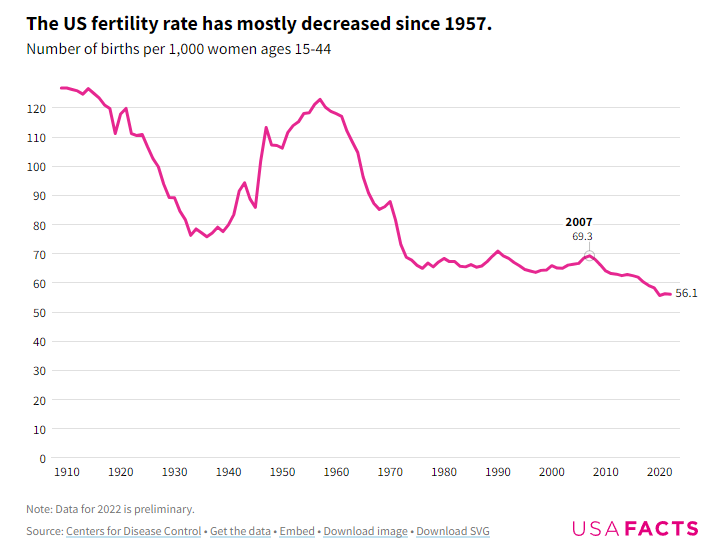
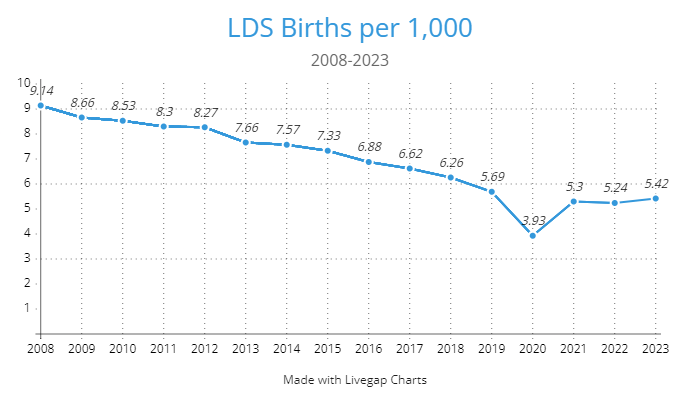
An interesting article I was linked recently about Israeli TFR (decent) has led to some speculative, preliminary thoughts on why the LDS TFR is what it is (bad).
First of all, don’t just accept everything the article says, at least when applied to non-Israeli fertility. I’m just using it as a jumping off point to look at various explanations folks have offered for low fertility and see whether they apply to us. This is more an attempt it is to find possible causes than it is a call for action. Just because something is a root cause doesn’t inherently mean that it ought to be fixed or can be fixed.
This blog will never be a popular Come Follow Me site. What people understandably want is a site that gives them cool insights when they are reading the material. But I get most of my insights in Sunday School when we are discussing the lessons from the last two weeks, or even in the days after when I am thinking about the Sunday School conversation. I believe that there is an intensification of the available spiritual insight as more and more of the Saints simultaneously turn their attention to a subject.
So here goes, thoughts and comments on the part of the Book of Mormon you are no longer reading.

Salt Lake announced a BYU medical school. Good. I love the ambition.
unlike many medical schools, the BYU medical school will be focused on teaching with research in areas of strategic importance to the Church
On the sweetness of Mormon life.
Your speaker at Church is a hardbitten, no-nonsense type who just got back from 6 months of hardbitten, no-nonsense type highly paid contract work in an African country where the Church has no presence (and is not allowed to). To take the sacrament, he had to get permission from a branch president in another country several hundred miles away using WhatsApp and Google Translate. Saturday mornings he read the Bible with a 7th Day Adventist fellow contractor. Sundays he sang hymns, blessed his own sacrament, then had “2 Apostles speek at every meeting.” He said he had a favorite picture from his trip he wanted to show us. It was a picture of a white plate with a rip of bread on it, a white teacup with water, both on a white napkin. He started to cry.