May 06th, 2022 by G.
Because I am a gape-jawed lackwit, I just now realized that all the fancy clothes in the Book of Mormon are priestly clothes.
Exodus 30-40: Fine-twined linen, scarlet, jewels, gold, and silver.
1 Nephi 13:
Behold the gold, and the silver, and the silks, and the scarlets, and the fine-twined linen, and the precious clothing, and the harlots, are the desires of this great and abominable church.
A lot of the stuff I have been reading in the Book of Mormon as a simple critique of the rich is more precisely a critique of the priestly castes, or of false priestly castes. It’s pretty blatant.
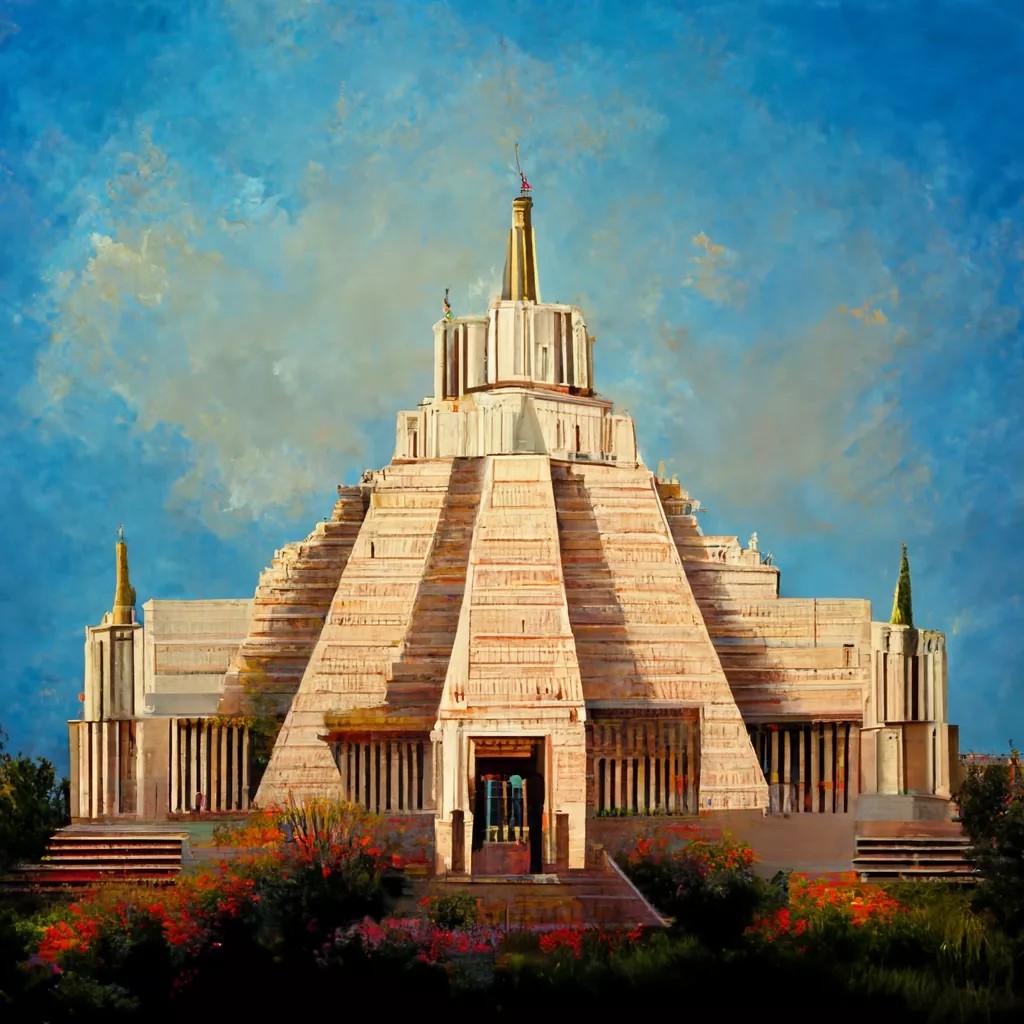
The great and spacious building isn’t simply high status, its specifically high-status in a priestly, temple way. We should think of the GSB as a coterie of folks offering a gnosis, a body of knowledge that you have to go through their programs to acquire, that is then supposed to fit you for wealth and prestige. Read your Nibley, I guess.
The one aspect of the tabernacle that is presented positively in the Book of Mormon is the curious workmanship.
Notice also that Nephi says the clothes and ornaments of priestliness are what they desire. These are people who exchange the reality of power and authority for playing power and authority dress-up. They will be ok being powerless functionaries if they get a corner office and a car with a driver.
P.S. The notable differences between the tabernacle and the GSB are (1) silks and (2) harlots. The harlots I get. The silks, dunno. Secular historians will say that silk didn’t hit the Middle East until after the Nephite Exodus, so I am not clear on what ‘silk’ even means in the Book of Mormon. Curiously, if you search for ‘silk’ on the church website, it returns you a pile of hits for ‘linen’.
P.P.S. –sotto voce– doesn’t the tabernacle in Exodus seem kinda . . . garish –sotto voce–
The Lord speaking to each people in their own tongue has *way* more implications than we think it does.