Interesting Stuff from the Mosiah-Alma period
There is a very interesting shift from the kings to the judges that involves a shift in religious authority and an outbreak of religious entrepreneurialism. Grant hardy’s ethnic breakdown thesis may be correct but I think it obscures more than it reveals.
Nephite modernity; Lessons from Nephite history ; Nephite civilization cycles
Let’s take a look at some more of the interesting questions and insights from this period.
- Did Abinadi have authority?
Abinadi brings a message from the Lord, he’s a prophet, and we associate prophesy with presidency and seership, but it doesn’t have to be. To me it looks like Abinadi was not claiming authority.
In fact, I wonder if this provides the context for what seems an unusual aside in our record, where when Ammon (the first one) finds the Zeniffites, they quickly fall to talking about these lost records that they find and then Ammon gives a resounding testimony that King Mosiah is a seer and that seership is the greatest gift. That’s in Mosiah 8. Then in Mosiah 28 Mosiah uses the gift. Is this in part a way of reaffirming Mosiah’s over-all religious supremacy? Here we have a people who have had their own separate priesthood and have had a prophet direct from God come to them. One of the very first things that happens when this people are discovered is we are told that Mosiah has a gift that goes beyond the gift of being a prophet.
I am not real clear on what the boundaries between seership and prophecy are. The main thing Abinadi did was deliver a message from the Lord but he also made prophecies about the future, such as that King Noah and others would die in the same manner they caused him to die. Alma the Younger had the same type of gift–he prophesied about the destruction of the Ammonihahites, which later happens in Alma 16. The whole episode in fact bears some very close resemblances to what happened with Abinadi and may have been, among other things, a needed reminder to the people that Alma was Abinadi’s spiritual heir and had authority as such. In that same chapter, Alma also tells the Nephite general where the attacking Lamanites can be found, which is done according to Alma’s “spirit of prophecy” (v.5). If none of these count as seership, perhaps the fact that Alma had ‘prophecy’ but not ‘seership’ played into the ongoing crisis of authority the Nephites experienced from these times onward.
It doesn’t sound very spiritual to talk about authority and who’s in charge, but these are things people worry about and are right to worry about, so it should be no surprise that they get space in the Book of Mormon.
- Where did Alma get his priesthood from?
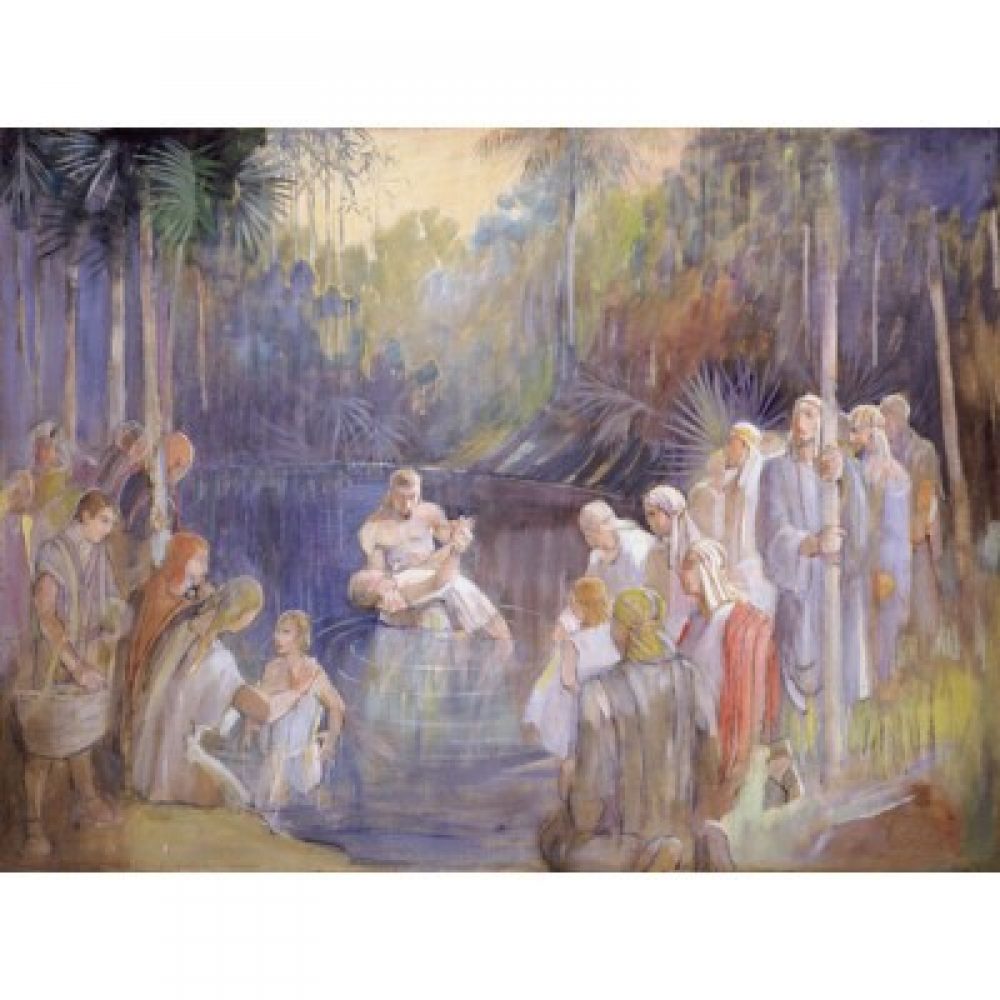
There is no record of it in the Book of Mormon, but clearly he was baptizing and our understanding is that baptism requires priesthood authority. He also ordained priests, exercised presidency, and eventually became the Nephite high priest without, as far as we can tell, any further ordination. At least, he ordained priests and exercised presidency over the church before even coming into contact with King Mosiah (Mosiah 18:18; also Alma 5:3?). Mosiah acquiesced in his authority but its not clear whether Mosiah actually ordained him or just acquiesced in his exercise of the authority he already had. Mosiah 25:19
19 And it came to pass that king Mosiah granted unto Alma that he might establish churches throughout all the land of Zarahemla; and gave him power to ordain priests and teachers over every church.
That the nature of authority was obviously a concern shows up in Alma and Amulek’s preaching to the Ammonihahites, where Alma spends ch. 13 of Alma talking about the Melchizedek priesthood and the nature of the high priesthood.
- Did the Nephites practice baptism before Alma?
Our record doesn’t say. On the one hand Nephi talks about baptism in 2 Nephi. (So does the book of Moses and at least in theory that might have been in the brass plates. I don’t think so, but I don’t know.) On the other hand, we see no further reference to baptism until Alma the elder institutes baptism in the waters of Mormon. Ammon (the first one) says he’s unfit to baptize when Limhi asks him (Mosiah 21:33) and when Alma’s people rejoin the Nephites at Zarahemla, Alma is still the one doing all the baptizing (Mosiah 25:17-18). The verse about Ammon declining to baptize implies that he had authority if he had been worthier but doesn’t say so outright, and when Alma instituted the church in Zarahemla everyone who joined was baptized, there doesn’t seem to have been anyone already baptized who was excused.
Something further to consider: the most likely source of Alma’s authority was simply that he was ordained by King Noah, the kings having authority to ordain during that Nephite dispensation. If that authority would have been valid, then so would any baptism he received have been valid, but then why would Alma have needed to baptize himself at the waters of Mormon. On the other hand, its not actually clear that Alma did baptize himself at the waters of Mormon. The words he spoke didn’t say anything about himself, just Helam (Mosiah 18:13-15)
I don’t have the answers, just some thoughts. Were the small plates not widely known? Mormon/Moroni who seem to be highly educated in the culure of Nephite literature wasn’t aware of it until he found it by accident. Nephi/Jacob also talk about Christ and his name but then Mosiah has the revelation of his name.
Could baptism has been esoteric or maybe temple based?
Could the language of the original small plates have been more veiled than our translation of it?
Also, we generally consider baptism as a covenant between us and God, but maybe we should be more aware of its function as the ordinance for joining a church–and no church as such existed until Alma’s time.

E.C.
July 3, 2024
There is a ‘retranslation’ of the Book of Mormon – not endorsed by the Church, but interesting nevertheless – which adds Jewish context to the Nephite experience, called “The Stick of Joseph in the Hand of Ephraim”.
It adds references to Torah and Midrash by various rabbis from Hillel onward (backward? I’m not familiar with which of the rabbis are ancient or modern – another rabbit hole to explore one day), one of which makes clear that baptism by immersion is an accepted practice in Judaism, which was widely understood and used as a recommitment to their YHWH and also their synagogue.
It also changes names to be closer to what they would look like coming from a Hebrew context, such as Nefi, Cheleman, M’roni, etc., and adds in Hebrew names for concepts such as ‘K’doshim’ (one holy or set apart) for ‘saints’.
While I prefer the KJV for beauty of language, I have found it valuable to study other translations of the Bible – so reading through this version of the Book of Mormon has been a fascinating exercise.
Jacob G.
July 3, 2024
In The Lost 116 Pages, Don Bradley argues that the ultimate priesthood authority lay with the king. This may explain v. 19 – Mosiah is exercising priesthood keys in directing what Alma can do, not giving him the priesthood. Or similar to how we have the priesthood authority to baptize but only do so under the direction of the bishop, or whoever has the keys for that jurisdiction.
Eric
July 7, 2024
I’ve long wondered if Abinadi was one of the old priests of Zeniff who got replaced by Noah’s priests, and that all of those priests were ordained by their respective kings before the wickedness of Noah’s generation became established.
When Mosiah grants Alma permission to organize churches and empowers him to ordain priests and teachers, I can read that as being legal permission and recognition, as much as it coming from some sort of ecclesiastical authority.
It also seems that knowledge of the small plates of Nephi wasn’t widespread among the people–something that probably happened during the generations described during the book of Omni. The Book of Mormon shows three instances where Jesus Christ’s name was revealed: first to Jacob and Nephi, then to King Benjamin, and (at about the same time) to Abinadi.
To be sure, the Nephites showed a general awareness of the scriptures during that whole time, probably through copies made from the brass plates. As has been mentioned, Mormon didn’t seem aware of the small plates of Nephi until he had already completed most of his abridgment and chose to add the small plates after covering that part of their history anyway.
G.
July 8, 2024
Eric, logical conclusions, good analysis.