Junior Ganymede
Servants to folly, creation, and the Lord JESUS CHRIST. We endeavor to give satisfaction

Moses was the Meekest of Men

May 07th, 2026 by G.

(Now the man Moses was very meek, above all the men which were upon the face of the earth.)

-Numbers 12

I have been chatting with a close family member about this and I have come to a realization.

I have no idea what the difference between being meek and being humble is.

Comments (8)
Filed under: We transcend your bourgeois categories | No Tag
No Tag
May 07th, 2026 07:06:17

New Light on the Deseret Alphabet

May 06th, 2026 by G.

https://romanticon.substack.com/p/burning-cellophane-at-the-gates-of

This gem:

One of [Joseph’s] last public sermons consisted of an idiosyncratic exegesis of the first six words of the Hebrew Old Testament.

Comments (1)
Filed under: We transcend your bourgeois categories | No Tag
No Tag
May 06th, 2026 07:40:06

The People the Boy Cried Wolf To

May 05th, 2026 by G.

Once upon a time there was a bored shepherd boy who cried wolf a couple of times just to laugh at the villagers’ fluster and for something to do.  You know the story.  So did the villagers, who told the boy the story and warned him he was endangering his own credibility.

A few days later, a ravening pack of wolves attacked the flock.  The flock fled downhill towards the village with the wolves snapping and gashing.  The boy yelled ‘wolves, wolves!’ as loud as he could and even blew a little horn he had.  The villagers came out in the street and watched without doing anything as the flock was killed sheep by sheep and then the boy.

A visiting stranger asked in some surprise why they hadn’t sallied to rescue their sheep and their shepherd boy.      The villagers explained.  “It’s a story,” they said, and told him the tale. “Just like the story, this boy cried wolf before so he had no credibility when wolves actually came.”

“There was no question of credibility!”  the stranger said.  “You saw the wolves!”

But the villagers looked at him with pity and a bit of contempt, and explained the story and its moral again.

Moral:   The Boy Who Cried Wolf has a moral for shepherd boys, not for villagers.

Comments (2)
Filed under: We transcend your bourgeois categories | No Tag
No Tag
May 05th, 2026 09:00:39

Happy Birthday, Betsey Pearl

May 04th, 2026 by G.

Today would have been my daughter’s birthday.

This is what I wrote on the first birthday she didn’t reach, on Betsey’s 4th birthday.

Betsey, so much time has gone by.  Your younger siblings are within reach of having children of their own and discuss naming daughters after you.

You were the oldest, now you are the youngest.

I think about you and how everyone else changes, time touches us all and we get injured or break down and add lines to our face, but you were touched so hard by time that now you aren’t touched at all.  Only our memories of you are still subject to mortality.

I think about all the times we never had together and all the times we did and I miss them all so much and I miss you so much.

I want to carry you in my arms or change your trache one more time.  Anything.

Betsey.


Comments (3)
Filed under: We transcend your bourgeois categories | No Tag
No Tag
May 04th, 2026 06:07:50

Moses and the Trolley Problem

May 03rd, 2026 by G.

I want to follow up with yesterday’s insight, that the Mosaic law challenged almost none of the Israelites’ cultural assumptions.  It just asked them to be decent by their own lights.

And they failed.

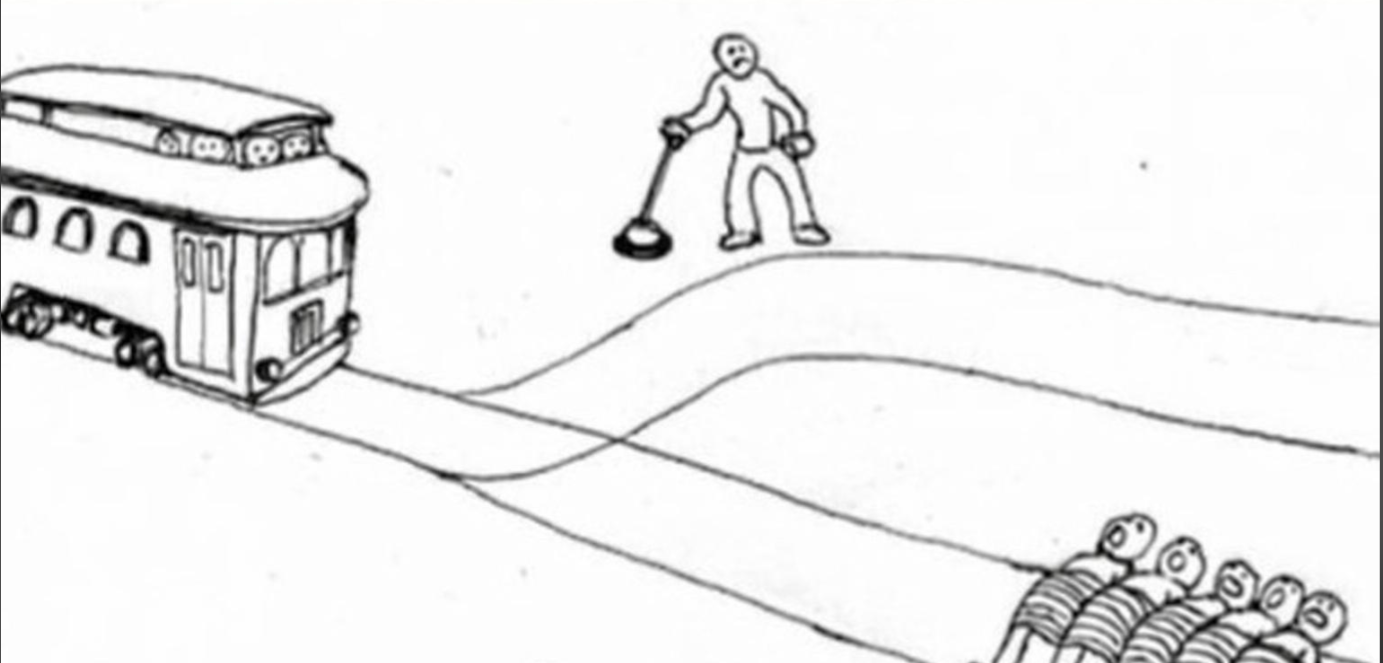
You’ve heard of the famous Trolley Problem–a turgid thought experiment where you have to decide to switch a trolley off the tracks where it will kill 5 onto tracks where it will kill 1.

There was a Twitter Sage who pointed out that the real trolley problem we actually encounter in our lives is much simpler:

The choice is obvious, there is no real cost at all to throwing the lever and saving five, but the lever keeps not getting thrown.  Inconvenience, unwillingness to admit error, malice, not wanting to rock the boat… the lever keeps not getting thrown.

The Trolley Problem and all its ilk are cope.  They invoke an abstract world of tough ethical choices to distract us from the real world of easy ethical choices that we keep not making.

Whatever your complaints about the Mosaic Law, you should keep in mind, front and center, that it was too ambitious.

Comments (2)
Filed under: We transcend your bourgeois categories | No Tag
No Tag
May 03rd, 2026 08:30:27

Be Decent By Your Own Lights

May 03rd, 2026 by G.

I’m thinking more about Moses’ rules and how they don’t fundamentally challenge any of the Israelites’ assumptions other than perhaps on idolatry.

Sometimes, nearly all the time, I go to God in prayer on some major life decision  and He says, ‘well, what do you want to do?”

And it seems that sometimes, nearly all the time, a people goes to God to know how to be and He says, ‘well, have you tried being decent by your own lights?”

“Worship me and be decent by your own lights.”

And when we abstract universalist Westerners get frustrated because God doesn’t give us or any other people the TRUTH as such, perhaps we should remember that sometimes, nearly all the time, when He tells a people to ‘be decent by your own lights,’ that people thoroughly and comprehensively fails.

Comments (1)
Filed under: We transcend your bourgeois categories | No Tag
No Tag
May 03rd, 2026 05:27:21

The Left-Chested Men

May 02nd, 2026 by G.

Once upon a time there was a tyrant/aspiring tyrant His power waxed and waned, but what he had he used relentlessly for the acquisition of more power.  His two great skills were this–he had, at times, a great deal of control over what was taught in the schools and put out over the media of mass transmission, and he and all his servitors were remarkably good at fencing.  This was a fencing, dueling people, so perhaps that was not so unusual, but even by the standards of this people he and his minions were good at it.  In particular, they were known for their deadly snap lunge-and-thrusts.

Which last skill would have been more useful if the people of that place were not also accustomed to wearing chestplates and armor.  Wonderfully light, wonderfully curved, the armor would make a good rapier rhrust skitter right off of it.

It so happened, however, that many years ago at a time when the tyrant had particularly strong grip over the schools and the tranmission of cultural information, he had put out, over and over, the virtue of left-chestedness.

Left-chestedness was an interesting virtue that combined savoir faire, ‘cool,’ unflappability, and strength and sword skill, but in practice and in the tangible world the way this virtue manifested was having a hole in your armor over your left chest.

Left-chested heroes in the movies were just so cool.

Nearly everybody started small–let’s not be crazy–but some people got more and more left-chested over time.  Why be less virtuous after all?  Plenty of ordinary people still only went around with small holes in their left chests and rolled their eyes or even angrily condemned those impractical ideologues who were almost uncovered on the left side,  and there were writers and intellectuals who were also of their persuasion and wrote learned discourses on why it wouldn’t do to be too left-chested–but all these people tended to be ineffective because, after all, they felt themselves to be arguing against virtue.

(more…)


Comments (1)
Filed under: We transcend your bourgeois categories | No Tag
No Tag
May 02nd, 2026 06:23:10

The People that Moses Had in Mind

May 02nd, 2026 by G.

When I wrote ‘what kind of people did Moses have in mind?”  I meant “persons,” “individuals.”


But I was wiser than I knew.  Reading his rules, it does seem like Moses had in mind a people.  This is a different perspective for us.

It also explains, in part, why the rules seem to  take so much their existing attitudes and assumptions as a baseline.  A people largely is those attitudes and assumptions.  The kinds of changes in habits and attitudes a people can make are not the same as the kinds of changes in habits and attitudes a person can make just writ large.

Comments Off on The People that Moses Had in Mind
Filed under: We transcend your bourgeois categories | No Tag
No Tag
May 02nd, 2026 05:09:58

What Kind of People did Moses Have in Mind

May 01st, 2026 by G.

We are reading the laws right now and I have slipped into a bit of literary exercise. I am reading them just like you read a science fiction novel, where you are supposed to be deducing bits and pieces about the environment and culture from what people say.

Specifically, I have been thinking about what kind of person Moses seems to have in mind–who is the target of his laws–who is the ‘you’?

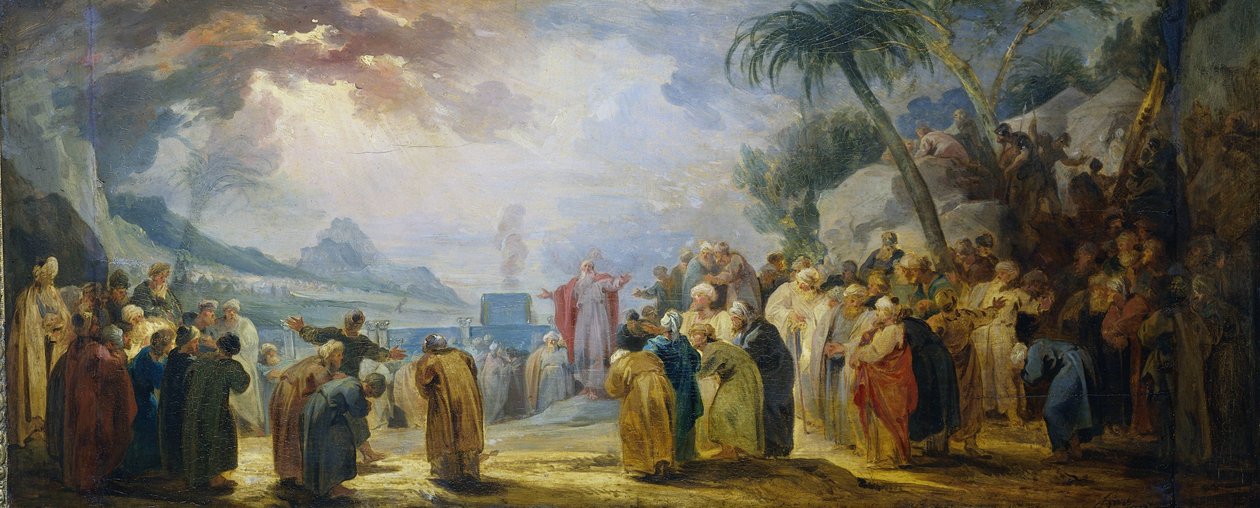
Moses Choosing the Seventy Elders by Jacob de Wit


Oddly enough the picture I am getting is the Scottish Highlands.  Maybe Albania or the old English-Scotch border with its micro-clans and hundreds of hill forts.  The picture I have is that Moses is addressing patriarchs, these small-scale Big Men, leaders of large households, gentry.  Those are the ‘you.’  Are they the same as the ‘elders’?  I don’t know, but probably.  The elders maybe are the older portion of that group.  And I get the impression that Moses identifies with them.  These are the ‘you’ whom he is addressing, but they are also, for him, ‘us.’

(more…)

Comments Off on What Kind of People did Moses Have in Mind
Filed under: We transcend your bourgeois categories | No Tag
No Tag
May 01st, 2026 06:04:20